
Designing Flexible Office Spaces for Future Growth
Designing Flexible Office Spaces for Future Growth
2/24/20262 min read
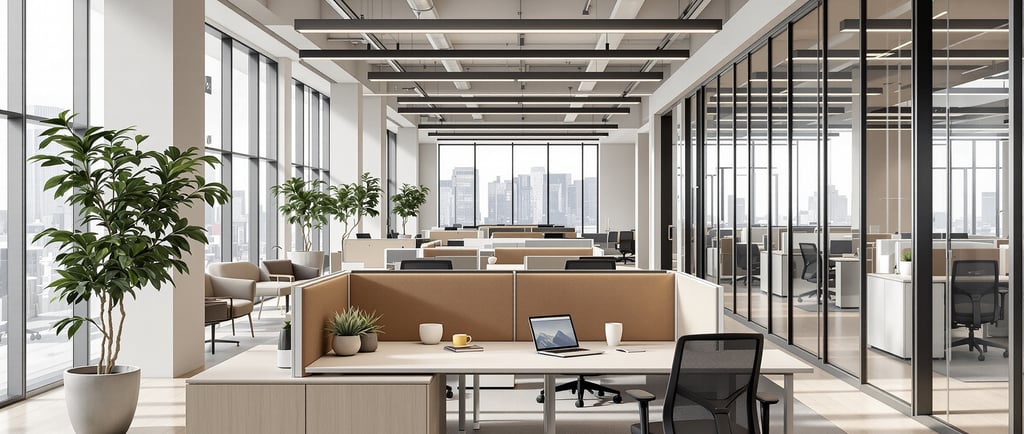
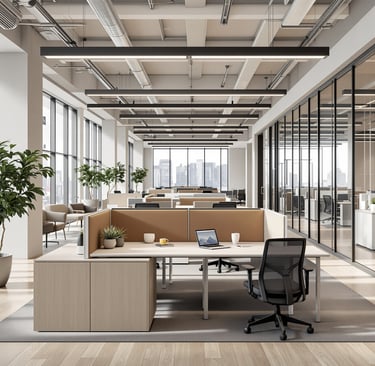
Designing Flexible Office Spaces for Future Growth
As business needs continue to evolve, office spaces must be designed to adapt. Fixed layouts that work today may quickly become inefficient as teams grow, work patterns change, or technology advances.
Designing flexible office spaces allows organisations to respond to future growth without frequent and costly renovations, ensuring long‑term functionality and sustainability.
Why Flexibility Matters in Office Design
Modern workplaces support a variety of work styles—from focused individual tasks to collaborative team activities and hybrid working arrangements.
Flexible office design helps businesses:
Adapt to changing team sizes
Support new ways of working
Extend the lifecycle of the office fit‑out
Reduce future renovation costs
Flexibility is no longer a luxury; it is a strategic requirement.
Key Principles of Flexible Office Design
1. Modular Space Planning
Modular layouts allow work areas to be reconfigured with minimal disruption.
Examples include:
Modular workstations
Movable partitions
Multi‑purpose rooms
These solutions enable offices to evolve as organisational needs change.
2. Multi‑Functional Spaces
Spaces designed for a single purpose often remain underutilised.
Flexible offices incorporate:
Meeting rooms that double as training or workshop spaces
Informal areas used for collaboration, presentations, or social interaction
Multi‑functional design maximises space efficiency.
3. Scalable Infrastructure
Building services should support future expansion.
Key considerations:
Additional power and data capacity
Flexible lighting systems
Adaptable HVAC zoning
Planning infrastructure early avoids major upgrades later.
4. Furniture That Supports Change
Furniture plays a crucial role in flexibility.
Effective choices include:
Height‑adjustable desks
Mobile storage units
Lightweight, reconfigurable seating
These elements allow teams to adjust layouts quickly.
Balancing Flexibility with Comfort
While flexibility is important, offices must still support comfort and productivity.
Design strategies include:
Acoustic treatments to manage noise
Clear zoning for focus and collaboration
Ergonomic furniture
A flexible office should enhance, not compromise, the work environment.
Planning for Future Growth
Growth may involve more staff, new departments, or changing workflows. Early planning ensures the office can accommodate these changes smoothly.
Professional space planning helps to:
Anticipate expansion scenarios
Maintain operational continuity
Protect long‑term investment
Conclusion
Designing flexible office spaces is an investment in future growth. By focusing on adaptability, scalable systems, and multi‑purpose design, organisations can create work environments that remain relevant and effective over time.
A well‑planned flexible office supports business growth, evolving work styles, and long‑term success.
Contact
Questions? Reach out anytime, we're here.
Phone
© 2025. All rights reserved.