
How Lighting Influences Dining Experience and Spending Behaviour
How Lighting Influences Dining Experience and Spending Behaviour
4/15/20262 min read
How Lighting Influences Dining Experience and Spending Behaviour
The Relationship Between Ambience, Colour Temperature, and Restaurant Revenue
Lighting is often perceived as a decorative finishing touch in restaurant design. In reality, it is one of the most powerful tools influencing customer mood, perception, and spending behaviour.
Beyond visibility, lighting shapes atmosphere.
Atmosphere influences emotion.
Emotion influences purchasing decisions.
For restaurants, lighting is not merely aesthetic — it is a strategic revenue driver.
1. Atmosphere and Spending: The Psychological Connection
Dining is an emotional experience. Customers do not only pay for food — they pay for ambience.
Lighting directly affects:
Perceived comfort
Length of stay
Social interaction
Perceived value of food
Research and industry observations consistently show that:
Softer, warmer lighting encourages longer stays and higher spending per table.
Brighter lighting supports quicker turnover and operational efficiency.
For example:
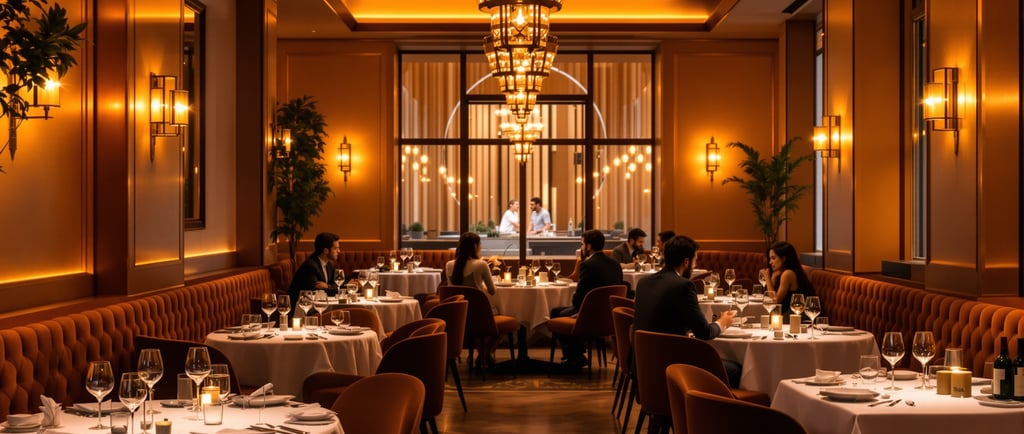
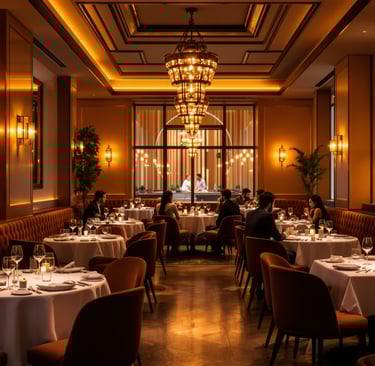
Fine dining restaurants typically use dim, warm lighting to create intimacy. This encourages customers to order appetisers, desserts, and premium beverages.
Fast-casual concepts often use brighter lighting to maintain energy and encourage efficient dining cycles.
Lighting subtly signals how long customers should stay.
When ambience aligns with concept, customers naturally behave in ways that support the business model.
2. Colour Temperature and Brand Positioning
Colour temperature, measured in Kelvin (K), significantly influences brand perception.
Warm light (approximately 2700K–3000K):
Creates intimacy and comfort
Enhances warm tones in food presentation
Supports premium or romantic positioning
Neutral light (around 3500K–4000K):
Feels clean and balanced
Suitable for modern casual dining
Maintains clarity without feeling clinical
Cool light (above 4000K):
Feels bright and energetic
Common in quick-service or high-efficiency environments
Can increase alertness but reduce perceived warmth
Choosing the wrong colour temperature can create brand confusion.
For example, overly cool lighting in a premium restaurant may reduce perceived food quality.
Excessively dim lighting in a fast-casual concept may slow turnover.
Lighting must reflect the restaurant’s positioning strategy.
3. Highlighting Products and Increasing Perceived Value
Strategic lighting can elevate food presentation and increase perceived value.
Effective techniques include:
Accent lighting on feature tables
Focused lighting on bar counters
Soft spotlighting on plated dishes
Layered lighting combining ambient, task, and accent sources
Food appearance significantly affects spending decisions. When dishes look vibrant and appetising, customers are more inclined to order additional items.
Well-designed lighting enhances:
Texture visibility
Colour richness
Visual contrast
In simple terms, better lighting makes food look more premium.
4. Layered Lighting Strategy: Balancing Function and Emotion
Successful restaurant lighting design typically includes three layers:
Ambient Lighting
Provides overall illumination and sets the general mood.
Task Lighting
Ensures sufficient brightness for practical activities, such as ordering or staff operations.
Accent Lighting
Creates visual interest and highlights focal points.
Relying on a single lighting source often results in a flat and uninspiring environment.
Layering allows flexibility — brightness can be adjusted between lunch and dinner services, adapting to different customer behaviours throughout the day.
5. Managing Energy Efficiency Without Sacrificing Experience
In high-rent and high-utility-cost cities like Hong Kong, energy efficiency is an important operational consideration.
Modern LED systems allow:
Adjustable brightness levels
Tunable colour temperatures
Zoned control for different seating areas
Smart lighting systems provide both ambience control and energy savings.
Strategic planning at the design stage prevents costly upgrades later.
Conclusion
Lighting influences more than visibility — it shapes perception, behaviour, and spending patterns.
Atmosphere affects how long customers stay.
Colour temperature communicates brand positioning.
Strategic highlighting increases perceived value.
When aligned with operational goals, lighting becomes a powerful business tool.
In the competitive F&B industry, thoughtful lighting design is not simply about creating a beautiful space — it is about shaping experience and driving revenue performance.
Contact
Questions? Reach out anytime, we're here.
Phone
© 2025. All rights reserved.