
How Office Layout Affects Productivity and Collaboration
How Office Layout Affects Productivity and Collaboration
2/25/20262 min read
How Office Layout Affects Productivity and Collaboration
Office layout plays a critical role in shaping how people work, interact, and perform on a daily basis. Beyond aesthetics, the way an office is planned directly influences productivity, collaboration, and overall employee experience.
A well‑designed office layout supports different work styles, encourages communication, and minimises unnecessary distractions.
The Relationship Between Space and Work Behaviour
Physical space affects how employees move, communicate, and focus. Poorly planned layouts can create barriers, increase noise, and reduce efficiency, while thoughtful layouts help teams work more effectively.
Understanding how space influences behaviour is the first step toward creating a productive workplace.
Supporting Productivity Through Layout Design
1. Providing Spaces for Focused Work
Productivity depends on the ability to concentrate. Open offices without adequate quiet areas often lead to distractions.
Effective layouts include:
Quiet zones or focus rooms
Enclosed spaces for tasks requiring deep concentration
Acoustic treatments to reduce noise
These elements allow employees to work efficiently without constant interruptions.
2. Reducing Unnecessary Movement
Excessive walking between workstations, meeting rooms, and shared facilities wastes time.
Smart layout planning considers:
Logical placement of departments
Centralised shared facilities
Clear circulation paths
This improves workflow and reduces inefficiencies.
Encouraging Collaboration Through Spatial Design
1. Creating Accessible Collaboration Areas
Collaboration is more likely when spaces are easy to access and comfortable to use.
Well‑designed offices provide:
Informal meeting areas
Shared tables or lounges
Open discussion zones near work areas
These spaces encourage spontaneous interaction without disrupting focused work.
2. Balancing Openness and Privacy
While open layouts promote communication, too much openness can reduce productivity.
A balanced approach includes:
Open work areas for team interaction
Enclosed meeting rooms for discussions
Phone booths or small rooms for private conversations
This balance supports both teamwork and individual tasks.
The Role of Lighting and Visibility
Natural light and visual connection play an important role in both productivity and collaboration.
Key considerations:
Maximising daylight penetration
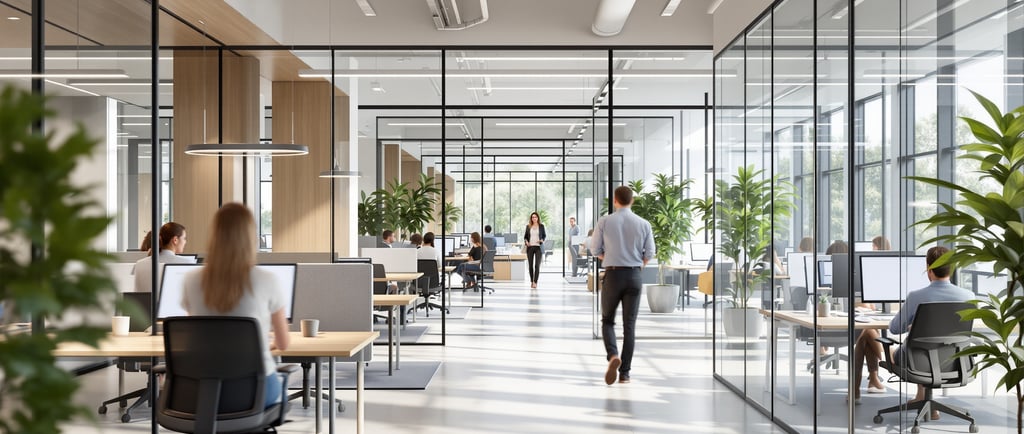
Using glass partitions instead of solid walls
Maintaining visual openness while controlling noise
Well‑lit spaces help employees stay alert and engaged.
Technology and Layout Integration
Modern office layouts must support technology use.
Good integration includes:
Adequate power and data points
Flexible furniture for hybrid work
Spaces designed for virtual meetings
Technology‑ready layouts improve collaboration across teams and locations.
Adapting Layouts to Organisational Needs
No single layout suits every organisation. Factors such as company culture, team size, and work processes should guide design decisions.
Successful layouts are:
Flexible and adaptable
Aligned with business goals
Scalable for future growth
Early planning ensures the office can evolve with the organisation.
Conclusion
Office layout has a direct and lasting impact on productivity and collaboration. By providing the right mix of focus spaces, collaborative areas, and efficient circulation, organisations can create environments that support both performance and teamwork.
Thoughtful planning and professional design turn office layouts into strategic assets—not just physical spaces.
Contact
Questions? Reach out anytime, we're here.
Phone
© 2025. All rights reserved.