
Open‑Plan vs Private Offices: Finding the Right Balance
Open‑Plan vs Private Offices: Finding the Right Balance
2/11/20262 min read
Open‑Plan vs Private Offices: Finding the Right Balance
The way an office is planned has a direct impact on productivity, communication, and employee well‑being. For many organisations, one of the key decisions during office renovation or relocation is whether to adopt an open‑plan layout, private offices, or a combination of both.
While open‑plan offices promote collaboration and flexibility, private offices provide focus and confidentiality. The most effective workplace environments often strike a balance between the two.
Understanding Open‑Plan Offices
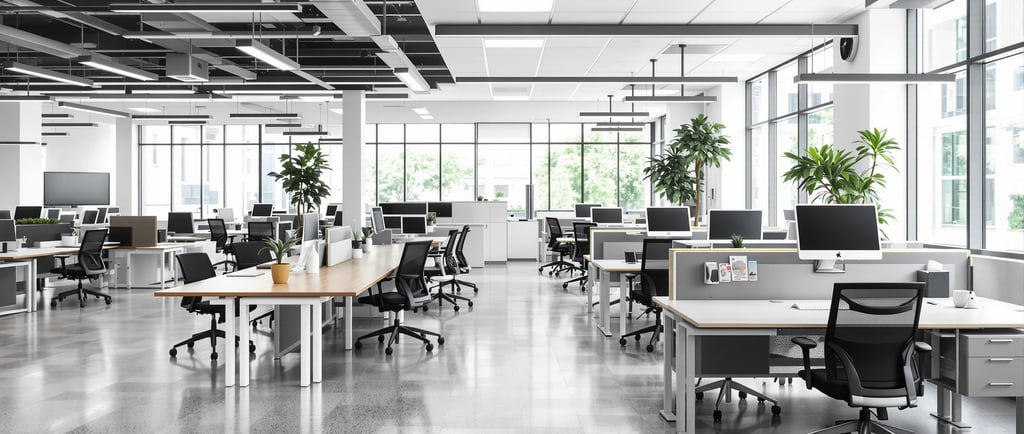
Open‑plan offices are designed to remove physical barriers, creating shared workspaces with minimal partitions.
Advantages of Open‑Plan Offices
Encourages communication and collaboration
Maximises use of limited floor area
Allows natural light to penetrate deeper into the space
Offers flexibility for future layout changes
Common Challenges
Noise and acoustic distractions
Reduced privacy for focused or confidential work
Higher potential for interruptions
Open‑plan layouts work best for teams that rely on frequent interaction and shared workflows.
The Role of Private Offices
Private offices provide enclosed spaces for individuals or small teams, often used by management or for specific functions.
Advantages of Private Offices
Improved acoustic privacy
Better support for concentration and confidential discussions
Clear separation for sensitive work
Common Challenges
Reduced visual openness
Less flexibility in space utilisation
Potential limitation of natural light
Private offices are essential in environments where focus, discretion, and uninterrupted work are required.
Why Balance Matters
Relying solely on either open‑plan or fully enclosed offices rarely meets all operational needs. Modern workplaces require a range of environments to support different work styles.
A balanced office layout can:
Support both collaboration and focused work
Improve employee satisfaction and productivity
Adapt more easily to changing organisational needs
Practical Design Strategies for Balance
1. Zoning the Workplace
Create distinct zones for collaboration, focus, and meetings. This allows employees to choose the most suitable environment for their tasks.
2. Using Glass Partitions
Glass partitions maintain visual openness and daylight while improving acoustic performance when properly specified.
3. Providing Focus Rooms
Small enclosed rooms or phone booths offer privacy without committing large areas to full private offices.
4. Acoustic Planning
Sound‑absorbing materials, ceiling treatments, and proper partition detailing help reduce noise in open areas.
5. Flexible Layout Planning
Designing adaptable spaces allows the office to evolve with organisational changes.
Considerations for Hong Kong Offices
In Hong Kong, office spaces are often compact, making efficient planning essential. Balancing openness with privacy requires careful attention to layout, acoustic control, and daylight access.
Well‑planned combinations of open work areas, enclosed rooms, and shared spaces can significantly enhance both functionality and comfort.
Conclusion
Open‑plan and private offices each serve important purposes in a modern workplace. The key to successful office design is not choosing one over the other, but finding the right balance based on operational needs, company culture, and space constraints.
Through thoughtful planning and professional execution, organisations can create office environments that support collaboration, focus, and long‑term growth.
Contact
Questions? Reach out anytime, we're here.
Phone
© 2025. All rights reserved.