
Restaurant Renovation: How to Minimise Business Downtime
Restaurant Renovation: How to Minimise Business Downtime
4/21/20262 min read
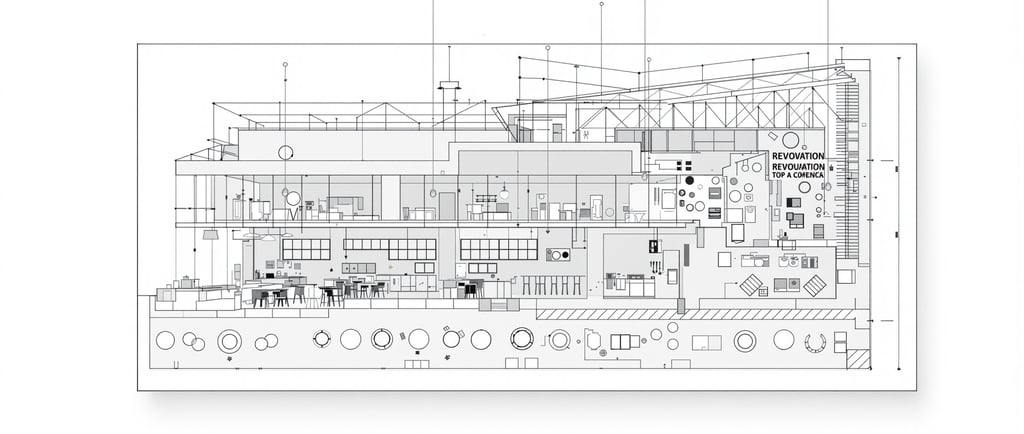
Restaurant Renovation: How to Minimise Business Downtime
Phased Construction, Night Works, and Operational Impact Control
In the F&B industry, time is revenue.
Unlike other businesses, restaurants cannot afford long closures during renovation. Every day of downtime means lost sales, disrupted customer habits, and potential loss of market share.
However, renovation is often necessary — whether for brand refresh, operational improvement, compliance upgrades, or concept repositioning.
The key challenge is not whether to renovate.
It is how to renovate without stopping the business.
Strategic planning makes the difference.
1. Phased Construction: Renovating in Strategic Sections
One of the most effective ways to minimise downtime is through phased construction.
Instead of shutting down the entire restaurant, renovation works are divided into clearly defined zones and scheduled in stages.
For example:
Renovating one seating zone while another remains operational
Upgrading the bar area first, followed by dining sections
Refurbishing restrooms separately from main dining space
This approach allows:
Continued partial operations
Reduced revenue interruption
Controlled workflow during construction
Phased renovation requires precise coordination between designers, contractors, and operations managers. Temporary partitions, dust control systems, and safety measures must be carefully implemented.
When planned correctly, customers may not even perceive major disruption.
2. Night Works: Using Off‑Peak Hours Strategically
For restaurants with strong daytime business, night construction can significantly reduce operational impact.
Night works are suitable for:
Lighting upgrades
Ceiling works
Minor layout adjustments
Equipment replacement
By scheduling disruptive works after closing hours, restaurants can reopen the next day with minimal interruption.
However, night works require:
Efficient task sequencing
Pre-delivered materials
Clear contractor scheduling
Strict safety supervision
Without proper coordination, night work may lead to delays and increased labour cost.
When managed professionally, it becomes a powerful strategy to protect revenue continuity.
3. Operational Impact Control: Managing Risk During Renovation
Renovation in an active restaurant environment introduces risks:
Noise disruption
Dust contamination
Customer discomfort
Service inefficiencies
Operational impact control focuses on minimising these risks.
Key strategies include:
Installing proper dust barriers and floor protection
Clearly separating construction and service circulation paths
Scheduling heavy works during low-traffic periods
Training staff to manage temporary layout changes
Communication is equally important. Informing customers in advance about minor upgrades can reposition renovation as a positive improvement rather than a disruption.
Transparency builds understanding.
4. Planning Before Construction Begins
The success of low-downtime renovation is determined before construction starts.
Professional planning should address:
Detailed renovation schedule
Operational contingency plans
Temporary seating adjustments
Kitchen workflow continuity
Compliance with safety regulations
A rushed renovation often leads to extended downtime, cost overruns, and operational confusion.
Strategic pre-planning reduces both financial and reputational risk.
5. Balancing Speed, Cost, and Quality
There is always a balance between:
Speed of execution
Construction cost
Design quality
Attempting to accelerate renovation without proper coordination may increase labour costs and errors. On the other hand, overly cautious scheduling can extend disruption.
An experienced renovation strategy finds the optimal balance — maintaining business continuity while upgrading the space effectively.
Conclusion
Restaurant renovation does not have to mean business closure.
Through:
Phased construction planning
Strategic night works
Careful operational impact control
Restaurants can refresh their space while protecting revenue flow.
In competitive F&B markets, maintaining operational continuity during renovation is not simply a construction issue — it is a business strategy.
When renovation is approached with strategic planning rather than reactive decision-making, it becomes an investment in growth rather than a period of loss.
Contact
Questions? Reach out anytime, we're here.
Phone
© 2025. All rights reserved.