
Retail Lighting Design: Creating Atmosphere That Sells
Retail Lighting Design: Creating Atmosphere That Sells
3/18/20262 min read
Retail Lighting Design: Creating Atmosphere That Sells
Lighting is one of the most underestimated yet powerful tools in retail design. While layout and merchandising shape how customers move, lighting shapes how they feel.
The right retail lighting design enhances product visibility, reinforces brand identity, and increases purchase intention. Poor lighting, on the other hand, can flatten displays, reduce perceived value, and shorten dwell time.
In competitive retail environments, atmosphere directly influences sales—and lighting is the foundation of that atmosphere.
1. Accent Lighting: Directing Attention to What Matters
Not all products deserve equal attention. Effective retail lighting creates hierarchy by highlighting priority merchandise.
Accent lighting is used to:
Spotlight new arrivals
Emphasise high‑margin items
Create focal points within displays
Guide customers along circulation paths
Without focal lighting, a store may appear evenly lit but visually dull. Contrast creates interest.
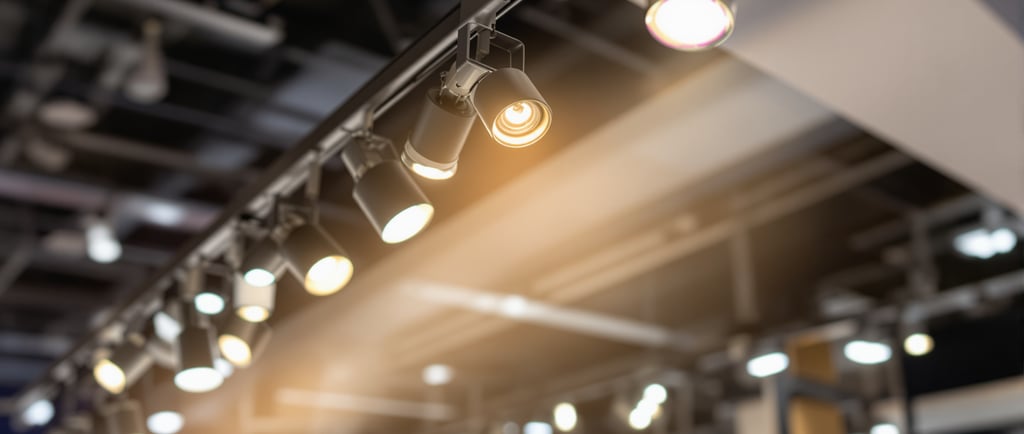
Track lights, adjustable spotlights, and display-integrated lighting systems allow flexibility as merchandising changes.
Where light goes, attention follows.
Where attention goes, sales follow.
2. Colour Temperature: Setting the Emotional Tone
Colour temperature significantly affects how customers perceive products and brand positioning.
Measured in Kelvin (K), lighting can range from warm to cool tones:
Warm white (2700K–3000K) – Creates a cosy, intimate atmosphere. Suitable for fashion boutiques, lifestyle stores, and luxury retail.
Neutral white (3500K–4000K) – Balanced and natural. Commonly used in modern retail environments.
Cool white (4000K–5000K) – Bright and crisp. Often used in technology or sports retail settings.
Incorrect colour temperature can distort product colours, especially in fashion and beauty stores where accurate colour representation is critical.
Lighting should enhance merchandise, not alter it.
3. Layered Lighting: Building Depth and Comfort
Effective retail lighting design combines multiple layers:
Ambient lighting – General illumination for overall visibility
Accent lighting – Highlights specific products
Task lighting – Focused lighting for checkout counters and fitting rooms
Relying solely on uniform ceiling lighting creates flatness and reduces spatial depth.
Layered lighting creates contrast, dimension, and visual rhythm. It helps customers navigate the space intuitively while maintaining comfort.
A well‑lit store feels inviting. An over‑lit store feels harsh. An under‑lit store feels unwelcoming.
Balance is key.
4. Lighting and Brand Identity
Lighting is not just functional—it communicates brand positioning.
For example:
Luxury brands often use warmer tones and softer contrasts to create exclusivity.
Fast‑fashion retailers may adopt brighter, higher‑energy lighting.
Beauty brands typically use accurate, neutral lighting to ensure product clarity.
Concept stores may use dramatic lighting to create experiential moments.
Lighting design should align with brand personality and target audience.
Inconsistent lighting can weaken brand perception, even if products are strong.
5. Lighting and Customer Behaviour
Retail lighting influences:
Dwell time
Product interaction
Mood and comfort
Perceived product value
Research consistently shows that well‑designed lighting increases perceived quality and encourages longer browsing time.
Customers feel more confident purchasing when they can clearly see textures, colours, and details.
Good lighting reduces hesitation.
6. Common Retail Lighting Mistakes
Store owners often make these errors:
Over‑reliance on bright general lighting
Ignoring spotlight angles
Using mismatched colour temperatures
Failing to adjust lighting when layouts change
Retail lighting design should be flexible and adaptable. Adjustable track systems and modular fixtures allow updates without full renovation.
Lighting should evolve with merchandising strategy.
Conclusion
Retail lighting design is a strategic sales tool. It shapes atmosphere, directs attention, reinforces brand identity, and influences purchasing behaviour.
From accent lighting and colour temperature to layered illumination strategies, thoughtful lighting design enhances both customer experience and commercial performance.
In retail, atmosphere is not accidental.
It is designed.
And lighting is what makes that design sell.
Contact
Questions? Reach out anytime, we're here.
Phone
© 2025. All rights reserved.