
Small Restaurant Design in Hong Kong: Maximising Limited Space
Small Restaurant Design in Hong Kong: Maximising Limited Space
4/14/20262 min read
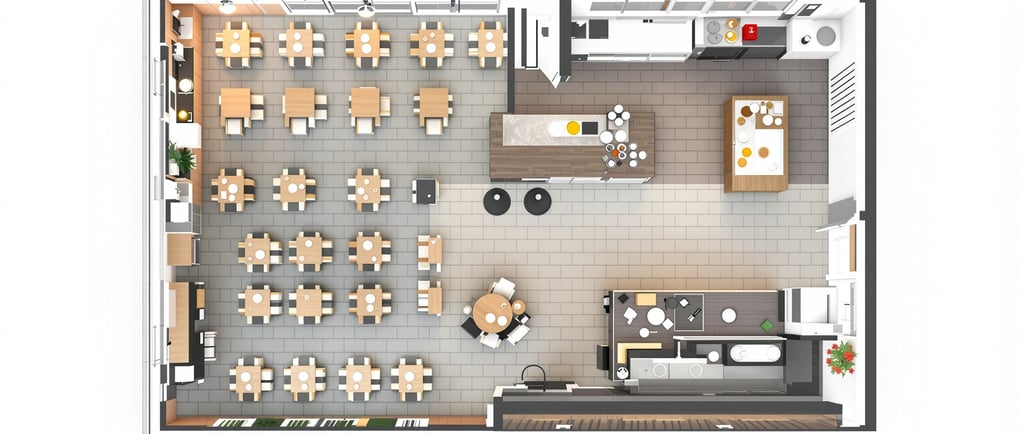
Small Restaurant Design in Hong Kong: Maximising Limited Space
How Smart Planning, Open Kitchens, and Integrated Storage Improve Efficiency and Profitability
In Hong Kong, limited floor area and high rental costs make small restaurant design particularly challenging. Every square metre carries significant financial weight, and inefficient planning can quickly impact profitability.
However, compact space does not mean limited potential.
With strategic layout planning, open kitchen concepts, and integrated storage solutions, small restaurants can achieve operational efficiency, strong brand identity, and sustainable performance.
Designing small spaces is not about fitting everything in — it is about making every element work harder.
1. Designing for Compact Floor Plates: Prioritising What Matters
Small restaurant layouts require clear prioritisation.
Key considerations include:
Optimal seat-to-space ratio
Clear circulation paths for staff and customers
Efficient zoning between dining and kitchen areas
Flexibility for peak-hour adjustments
In tight spaces, unnecessary corridors or oversized waiting areas reduce revenue-generating capacity.
The layout should minimise wasted space while ensuring:
Comfortable seating distances
Safe and efficient service routes
Logical adjacency between kitchen and dining
A well-planned small restaurant does not feel cramped — it feels intentional.
2. Open Kitchen Concept: Transparency and Space Efficiency
In compact restaurants, walls can consume valuable space. An open kitchen concept often provides both spatial and branding advantages.
Benefits include:
Eliminating full-height partitions to increase visual openness
Creating a sense of transparency and trust
Turning food preparation into part of the dining experience
Improving communication between front and back of house
Visually open environments make small spaces feel larger. Customers perceive openness as spaciousness, even when floor area is limited.
However, successful open kitchens require careful planning:
Proper ventilation and extraction systems
Acoustic management
Clean and organised workstations
Thoughtful lighting design
When executed correctly, an open kitchen becomes both an operational solution and a branding feature.
3. Integrated Storage: Reducing Clutter Without Reducing Capacity
Storage is one of the most underestimated elements in small restaurant design.
Without integrated storage planning, restaurants often end up with:
Visible clutter in dining areas
Temporary shelving blocking circulation
Inefficient back-of-house congestion
Effective storage strategies include:
Built-in bench seating with concealed compartments
Vertical shelving systems
Overhead storage in kitchen zones
Multi-functional furniture with hidden capacity
Vertical thinking is essential in Hong Kong’s compact commercial units.
By integrating storage into architectural elements, restaurants can maintain a clean aesthetic while preserving operational functionality.
Clutter-free spaces improve both workflow and customer perception.
4. Balancing Seating Density and Customer Comfort
Maximising seats is important, but over-compression reduces dining quality.
Design strategy should balance:
Revenue per square foot
Comfort and privacy
Brand positioning
For example:
A fast-casual concept may prioritise higher seating density.
A café encouraging longer stays may allocate more spacing.
A premium small restaurant may use booth seating to enhance intimacy.
Seating strategy must align with operational goals and target customer behaviour.
5. Designing for Efficiency in High-Rent Environments
In Hong Kong, rent often represents one of the highest fixed costs in the F&B industry.
Small restaurant design should therefore focus on:
Efficient kitchen-to-table proximity
Minimising staff movement distance
Clear peak-hour management
Flexible seating configurations
Even minor layout adjustments can significantly improve:
Table turnover rate
Staff productivity
Daily revenue performance
Smart design directly supports financial sustainability.
Conclusion
Small restaurant design in Hong Kong requires precision, efficiency, and strategic thinking.
Compact floor plates demand:
Clear spatial prioritisation
Smart open kitchen integration
Built-in storage solutions
Balanced seating density
When every element is thoughtfully planned, small restaurants can feel spacious, operate efficiently, and remain highly profitable.
Limited space does not limit success —
it simply requires smarter design decisions.
Contact
Questions? Reach out anytime, we're here.
Phone
© 2025. All rights reserved.