
Upstairs Restaurants in Industrial Buildings: Is It Worth the Risk? 上樓餐廳進駐工廈:風險值得承擔嗎?
Upstairs Restaurants in Industrial Buildings: Is It Worth the Risk? 上樓餐廳進駐工廈:風險值得承擔嗎?
6/16/20263 min read
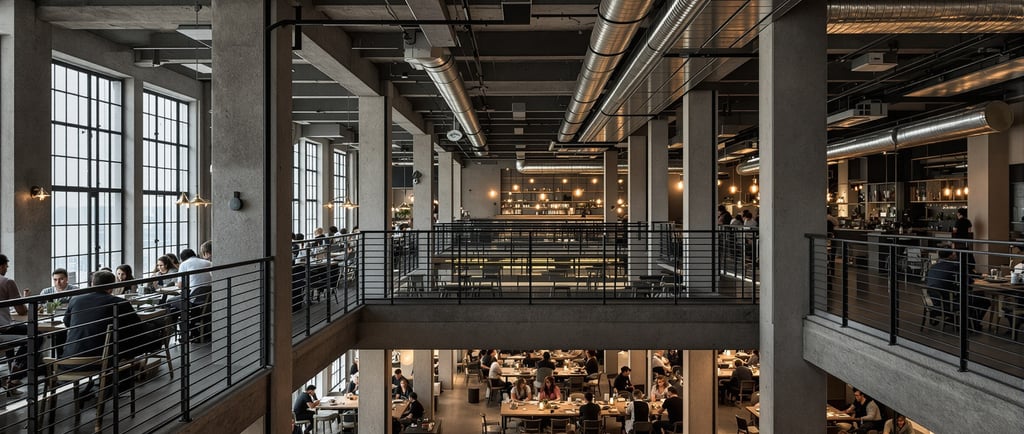
Upstairs Restaurants in Industrial Buildings: Is It Worth the Risk?
上樓餐廳進駐工廈:風險值得承擔嗎?
In recent years, upstairs restaurants in industrial buildings have become a trend.
Lower rent, larger space, and flexible layout make industrial units attractive for F&B startups. In districts like Kwun Tong, San Po Kong, and Tsuen Wan, more operators are exploring industrial buildings as an alternative to high street retail.
But behind the trend lies a serious question:
Is opening a restaurant in an industrial building truly worth the risk?
Before signing a lease, operators should understand the structural, regulatory, and operational challenges involved.
1️⃣ FEHD & Licensing Restrictions
The first major hurdle is licensing.
Industrial buildings were originally designed for industrial use — not food and beverage operations.
Depending on the building’s permitted use and lease conditions, restaurant licensing may face:
Use restriction issues
Fire safety upgrade requirements
Means of escape compliance checks
Ventilation system approval
Building Department scrutiny
Even if similar restaurants exist in the same building, it does not automatically guarantee approval for your unit.
Licensing risk is one of the biggest uncertainties in upstairs restaurant setups.
Without early feasibility assessment, operators may commit to lease agreements before knowing whether approval is realistically achievable.
2️⃣ Exhaust Duct Routing: The Hidden Engineering Challenge
Cooking generates grease, smoke, and odour.
Proper exhaust routing is not optional — it is mandatory.
Key challenges in industrial buildings include:
Lack of existing vertical duct shafts
Long horizontal duct runs
Shared façade limitations
Building management restrictions
Fire-rated enclosure requirements
Installing a compliant exhaust system may require:
Routing ducts through common areas
Penetrating slabs or walls (subject to approval)
Installing rooftop exhaust fans
This can significantly increase renovation cost and approval time.
In many cases, exhaust feasibility determines whether the project can proceed at all.
3️⃣ Noise Complaints & Operational Friction
Restaurants generate multiple sources of noise:
Kitchen exhaust fans
Chillers and condensers
Customer traffic
Delivery handling
Late-night operations
Industrial buildings today often contain:
Offices
Beauty centres
Education studios
Warehouses
Creative businesses
Mixed occupancy increases the likelihood of complaints.
Noise disputes can lead to:
Management warnings
Operational restrictions
Early lease termination pressure
Acoustic mitigation and equipment placement planning are essential.
4️⃣ Lift Capacity & Building Circulation
Unlike ground floor restaurants, upstairs restaurants rely heavily on lifts.
Peak hour scenarios:
Lunch rush
Dinner crowd
Delivery riders
Waste removal
Supplier loading
If the building has:
Limited passenger lifts
No separate service lift
Slow lift speed
High tenant density
Customer experience may suffer.
Additionally, lift loading capacity must be considered for:
Kitchen equipment delivery
Refrigeration units
Renovation materials
Lift logistics are often overlooked during site selection.
5️⃣ Neighbour & Management Issues
Industrial buildings are typically managed differently from commercial malls.
Potential friction points include:
Grease trap maintenance
Waste storage
Odour complaints
Shared corridor usage
Signage restrictions
Some management offices may be supportive; others may strictly limit F&B activities.
A restaurant operator must assess not only the unit — but also the building culture.
6️⃣ Fire Safety & Means of Escape
Restaurants have higher occupant load compared to offices or warehouses.
This impacts:
Exit width requirements
Travel distance limitations
Fire service installations
Emergency lighting
Sprinkler system adequacy
If the building was not originally designed for high-density dining use, upgrades may be required.
Failure to comply can delay licensing or create enforcement risk.
The Financial Equation: Lower Rent vs Higher Risk
The main attraction of upstairs restaurants is rental savings.
But operators must balance:
✔ Lower base rent
✖ Higher renovation complexity
✖ Approval uncertainty
✖ Longer setup timeline
✖ Operational constraints
The financial model must account for:
Extended pre-opening period
Engineering consultancy
Licensing application cost
Possible redesign scenarios
Cheap rent does not always mean lower total cost.
So — Is It Worth It?
Upstairs restaurants in industrial buildings can succeed.
Many have built strong followings and unique branding.
But success depends on:
Early technical feasibility study
Realistic licensing assessment
Exhaust routing confirmation
Lift capacity review
Building management alignment
Opening in an industrial building is not just a location decision.
It is a regulatory and engineering strategy.
Before committing to a lease, operators should evaluate both opportunity and risk.
Because in F&B, timing and cash flow are everything.
Conclusion
The upstairs restaurant trend reflects creativity and entrepreneurial spirit.
However, industrial buildings were not originally designed for dining operations.
Without careful planning, what appears to be a rental advantage may become a regulatory challenge.
If you are considering opening an upstairs restaurant in an industrial building, conduct proper due diligence first.
Strategic planning reduces risk — and protects your investment.
Contact
Questions? Reach out anytime, we're here.
Phone
© 2025. All rights reserved.